HVAC • Cooling • Miami Homes
If you’ve been shopping for a new AC system, you’ve probably come across the term variable speed air conditioner. It sounds technical, but the core idea is straightforward: instead of running at one fixed speed, the compressor adjusts its output to match exactly what your home needs at any given moment.
For South Florida homeowners dealing with year-round heat and humidity, that distinction matters more than almost anywhere else in the country. Trinity Air Conditioning has been installing and servicing AC systems across Miami since 1986, and we’ve seen first-hand how the right equipment choice affects both comfort and long-term costs. That’s why we’ve put together this guide that covers what variable speed air conditioners are, the pros and cons of the unit, and the methods homeowners use to determine if variable speed AC is right for them.
How Variable Speed Air Conditioners Work
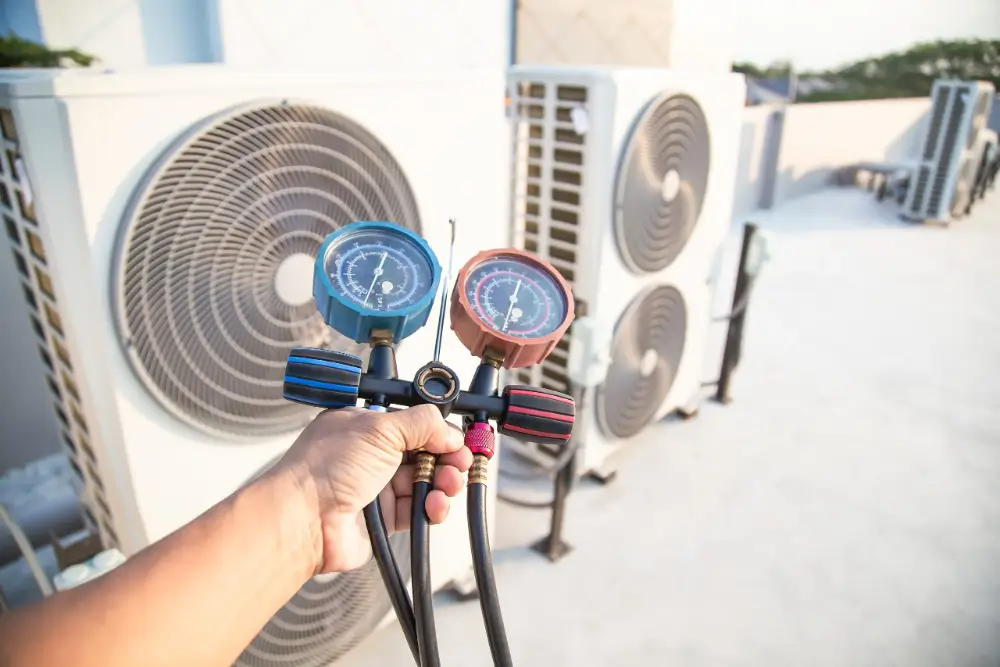
A standard single-stage air conditioner operates like a light switch: it’s either fully on or fully off. A two-stage unit adds one middle setting. In contrast, a variable speed AC—also called an inverter-driven system—uses an electronically commutated motor to continuously modulate compressor speed across a wide range, often between 30% and 100% of its rated capacity.
This means that when your home is only mildly warm, the variable AC system runs at a low, steady output rather than blasting on at full power and cycling off once the thermostat is satisfied. This constant, gentle operation is what drives the efficiency and comfort advantages the technology is known for. Most variable speed systems pair the inverter compressor with a variable speed air handler and, ideally, a communicating thermostat—giving the equipment precise, real-time control over both airflow and cooling output. If you’re comparing options for your home, our local AC installers can walk you through which equipment tier fits your load requirements.
Key Takeaways — How Variable Speed ACs Work
- Variable speed compressors modulate output continuously rather than cycling on and off at full capacity.
- The system pairs best with a variable speed air handler and a communicating thermostat for maximum efficiency gains.
- Lower, steadier run speeds are what deliver both the comfort and energy savings associated with this technology.
Variable Speed Air Conditioner Pros and Cons
Like any significant equipment investment, variable speed air conditioners have clear advantages and a few trade-offs worth understanding before you commit.
Advantages
- Better humidity control. In South Florida, this is arguably the biggest benefit. Because the system runs longer at lower speeds, it moves more air across the evaporator coil and pulls significantly more moisture out of your indoor air. Paired with proper dehumidification, the difference in comfort is noticeable.
- Higher energy efficiency. Variable speed systems carry some of the highest SEER2 ratings on the market. Running at partial capacity most of the time consumes far less electricity than a system repeatedly cycling at full power.
- More consistent temperatures. Single-stage systems create noticeable swings between cycles. Variable speed units maintain a steadier indoor temperature—typically within half a degree of the setpoint—because they never fully stop working.
- Quieter operation. At low speed, the compressor and air handler are significantly quieter than a single-stage system running at full capacity.
- Longer equipment life. Frequent hard starts put mechanical stress on compressors. A system that ramps up and down gradually instead of cycling on and off at full load tends to experience less wear over time.
Disadvantages
- Higher upfront cost. Variable speed systems cost more to purchase and install than single-stage equipment. The gap has narrowed as the technology has matured, but it remains real.
- More complex repairs. Inverter boards and variable speed motors require technicians who know the technology. Our AC repair team is trained on current variable speed equipment, but not every contractor in the area is.
- Longer payback period in mild climates. For South Florida, this is rarely a concern given how hard systems run here—but it’s worth noting that the efficiency gains are more pronounced the more hours per year the system operates.
Key Takeaways — Variable Speed Air Conditioner Pros and Cons
- The primary advantages are superior humidity control, higher efficiency, steadier temperatures, quieter operation, and reduced mechanical wear.
- The primary trade-offs are a higher purchase price and more specialized repair requirements.
- In South Florida’s climate, the efficiency and humidity benefits make variable speed systems a strong fit for most homes running AC year-round.
Is a Variable Speed AC Right for Your Home?
For most South Florida homeowners, the answer is yes—with one important qualifier: the system needs to be correctly sized and properly installed to deliver what it promises. An oversized variable speed unit in an undersized home still short-cycles. An undersized unit struggles in peak summer heat. Proper Manual J load calculation is non-negotiable before any recommendation is made.
Variable speed equipment is especially well-suited for:
Humidity Issues
Homes where humidity control is a persistent issue, even with a properly functioning standard system.
Long-Term Savings
Homeowners planning to stay in the home long enough to recoup the higher upfront investment through energy savings.
Ductless Systems
Properties with ductless or mini split configurations, since most ductless systems already use inverter-driven compressors by design.
Commercial Properties
Commercial properties where run hours are long and comfort consistency affects productivity—see our local commercial HVAC services for more.
If your current system is aging and you’re planning a replacement, this is a good time to evaluate whether a variable speed upgrade makes financial sense. Our team can review your home’s existing ductwork condition and equipment history before making a recommendation. Call us at (305) 224-6935 or contact us online to schedule a consultation.
Key Takeaways—Is a Variable Speed AC Right for Your Home?
- Variable speed systems perform best when they are correctly sized through a proper load calculation—oversizing defeats the efficiency advantage.
- They are an especially strong fit for South Florida homes where humidity control and long run-hours amplify the technology’s benefits.
- Ductless and mini split systems already use inverter-driven compressors, making them a natural entry point into variable speed technology.
Frequently Asked Questions About Variable Speed Air Conditioners
What is a variable speed air conditioner?
A variable speed air conditioner uses an inverter-driven compressor that adjusts its operating speed continuously based on your home’s current cooling demand, rather than cycling on and off at a fixed full-speed setting. This allows the system to fine-tune its output in real time, improving both efficiency and comfort.
How does a variable speed AC differ from a two-stage unit?
A two-stage system has two fixed output levels—typically 65% and 100%. A variable speed AC operates across a continuous range, often from around 30% to 100%, making it more precise and generally more efficient than a two-stage system, particularly in climates with long cooling seasons.
Do variable speed air conditioners really save money?
Yes, for most South Florida homeowners. Because the compressor spends the majority of its runtime at partial load rather than full capacity, it uses less electricity per hour of operation. The savings accumulate significantly over a cooling season as long and intense as Miami’s.
Are variable speed air conditioners harder to repair?
They require technicians trained on inverter-driven systems, which is a more specialized skill set than servicing standard single-stage equipment. Trinity’s HVAC repair team is experienced with variable speed equipment and carries the parts needed for most repairs.
What is the lifespan of a variable speed AC?
With proper installation and regular AC maintenance, variable speed systems typically last 15 to 20 years. The reduced mechanical stress from gradual ramping—rather than hard on/off cycling — contributes to longer compressor life.
Do mini splits use variable speed technology?
Yes. Most ductless mini split systems use inverter-driven compressors by design, making them variable speed by default. If you’re interested in a ductless option, our team handles ductless installation in Coral Gables and throughout the Miami area.
What SEER rating should I look for in a variable speed system?
For South Florida’s climate, look for a SEER2 rating of at least 16 to 18 for meaningful efficiency gains over standard equipment. High-efficiency variable speed systems often reach SEER2 ratings of 20 or higher. Trinity’s installation team can help you match the right efficiency tier to your home’s load and your budget.
Whether you’re replacing an aging AC system or simply comparing efficiency options, the best choice starts with a clear understanding of your home, your comfort concerns, and your long-term energy goals. Trinity Air Conditioning can help you evaluate your options and choose equipment that fits South Florida’s climate, your budget, and the way your home actually cools.